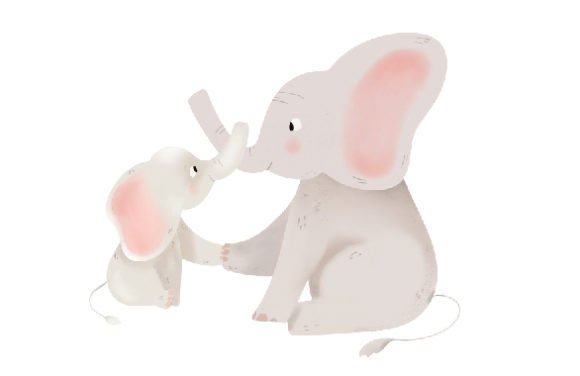
Mom and Baby Elephants, Watercolor
A Soft, Tender Moment—Not Just Another Mother’s Day Clipart
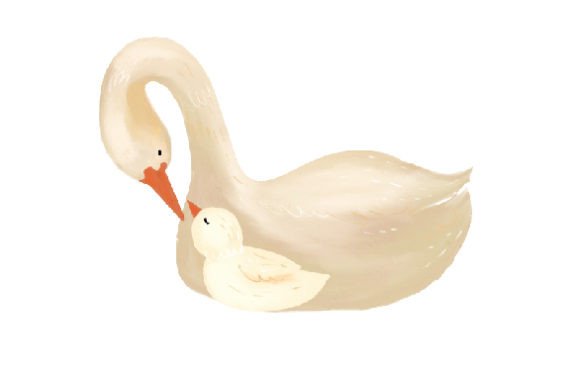
First glance at Mom and Baby Elephants, Watercolor isn’t about precision or punch—it’s about breath. The design feels like a quiet exhale: two gentle silhouettes leaning into each other, rendered with loose, blended edges and subtle pigment variation. No hard outlines. No rigid symmetry. Just soft watercolor washes suggesting shape, weight, and warmth. It’s not built for bold statement embroidery on a baseball cap—it’s made for the hush of a baby blanket, the thoughtful stitch on a linen tea towel, or the personal touch of a custom embroidered tote bag gifted to a new mom.
Where This Design Truly Lives—and Thrives
I recently tested Mom and Baby Elephants, Watercolor on a medium-weight cotton canvas tote—intended for a small-batch boutique launch ahead of Mother’s Day. The result? A finished product that felt handmade *without* looking labored. The watercolor effect translated beautifully in satin-stitched outlines paired with airy fill stitches—especially when using tonal thread colors (soft taupe for the mother, pale blush for the calf). It worked just as well on a lightweight linen pillow cover, where the design’s openness prevented stiffness or puckering. For Etsy sellers, this is gold: it reads as intentional, warm, and quietly sophisticated—not generic or overdesigned.
It also holds up surprisingly well on baby onesies, provided you use a light tear-away stabilizer and reduce stitch density slightly. The lack of fine internal detail means fewer skipped stitches on stretchy knit fabrics. And yes—it even landed softly on a curved sweatshirt yoke, thanks to its balanced negative space and modest width-to-height ratio. That’s rare for watercolor-style machine embroidery designs.
Where to Pause—Not Panic—Before Stitching
This isn’t a “set-and-forget” file. Its charm lives in subtlety, which means context matters more than usual. On dark fabric, test contrast first: a single layer of light thread may disappear unless you add a white underlay or switch to a higher-opacity thread. On textured fabrics like terry cloth or bouclé, the watercolor softness can blur further—so consider simplifying the outer edge with a clean running stitch outline if clarity is critical.
Small hoop sizes (under 4 inches) will require careful placement—the composition leans vertically, so centering both elephants without cropping the base or sky space takes planning. And while it’s lovely on flat surfaces, avoid dense stitching near seams or curved caps unless you’ve pre-tested tension on scrap fabric with the same stabilizer combo you’ll use commercially.
What It Adds to Your Finished Product—Beyond Aesthetics
Mom and Baby Elephants, Watercolor doesn’t shout. It invites. That makes it unusually effective for products meant to be held, gifted, or kept close: baby blankets, nursery wall hangings, keepsake tea towels, or personalized aprons for moms who cook, create, or care. Customers notice the intention behind it—they feel seen, not sold to. For craft businesses and Etsy sellers, that translates directly to higher perceived value, better photo mockups, and stronger repeat engagement.
It also supports brand consistency without demanding uniformity. You can pair it with minimalist typography on a greeting card, then reinterpret it in high-contrast black-and-white for a printable mockup—or rework the color palette entirely in your embroidery software to match a client’s nursery scheme. As a digital embroidery file, it’s flexible enough for both personal projects and commercial embroidery work, assuming licensing permits resale of finished items (always verify that before listing).
Practical Designer Notes—No Fluff, Just What Works
- Always test on scrap fabric first—especially with your chosen stabilizer and thread combo. Watercolor illusions rely on stitch behavior, not just vector lines.
- Review stitch density before scaling. Enlarging too much can cause fill areas to look heavy; shrinking too far risks losing the delicate gradient effect.
- Check small details in black-and-white mockups. What reads as soft on screen may vanish in monochrome stitching—adjust contrast or add subtle outlining if needed.
- Compare performance on light vs. dark backgrounds. A transparent PNG works great for digital previews, but real-world thread coverage varies significantly.
- Use proper stabilizer: light cutaway for knits, medium tear-away for stable wovens, and ultra-light for delicate linens.
- Confirm licensing terms before selling finished embroidered products or bundling the file with other design assets.
- Remember its category: while versatile, it belongs most naturally in Mother’s Day and Crafts contexts—not corporate branding or sportswear lines.
Final Thought: A Design That Earns Its Place
Mom and Baby Elephants, Watercolor won’t dominate a tradeshow booth—but it will linger in a customer’s memory when folded into a gift box with lavender sachets and handwritten notes. It’s the kind of embroidery file that elevates a simple tote bag into a cherished heirloom, or turns a plain kitchen towel into a quiet celebration of care. For designers, small shop owners, and makers who value authenticity over volume, it’s not just another machine embroidery design. It’s a thoughtful tool—one that reminds us why we stitch in the first place: to make something tender, true, and made by hand.