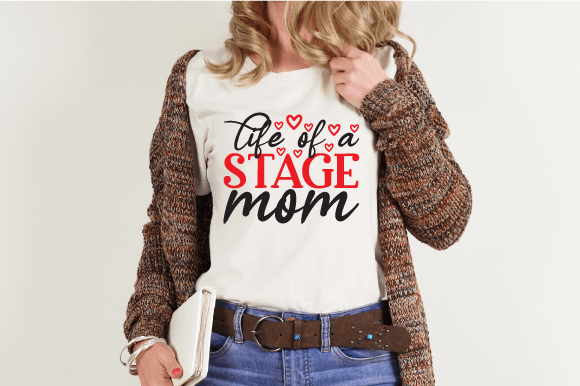
Life of a Stage Mom
A Designer’s First Glance: Warm, Witty, and Worn-in Right Away
Opening Life of a Stage Mom feels like flipping open a well-loved rehearsal notebook—full of heart, humor, and just the right amount of gentle chaos. The design leans into soft curves, friendly typography, and subtle illustrative touches (a tiny microphone, maybe a half-unzipped backpack or a coffee cup with steam). It’s not loud or flashy; it’s *relatable*. That’s its strength—and its quiet challenge. As a designer who’s stitched hundreds of custom pieces for boutique shops and Etsy sellers, I immediately asked: “Where does this land best when stitched—not on screen, but in thread?”
Real-World Test: Embroidering a Cotton Canvas Tote for a Local Dance Studio
Last week, I prepped Life of a Stage Mom for a limited-run embroidered tote bag order from a small-town dance studio. Their moms volunteer at every recital, drive carpools, and sew last-minute costumes—so authenticity mattered more than polish. I chose a medium-weight natural canvas tote, 4-inch hoop, tear-away + light cutaway stabilizer combo, and classic 40-weight polyester thread in navy and warm gray. The result? Crisp lettering, smooth satin-stitched outlines, and enough breathing room between elements to avoid thread buildup. Customers didn’t just recognize the phrase—they *nodded*. That’s the gold standard for a T-Shirt Designs graphic turned embroidery file: it sparks recognition before it’s even read aloud.
Where It Shines—and Where It Needs Careful Handling
Life of a Stage Mom works beautifully on:
- Sweatshirt embroidery — Its generous spacing and moderate detail hold up well on fleece-backed fabric, especially on left-chest placement.
- Embroidered patch — Clean edges and minimal fine lines make it ideal for heat-applied or sew-on patches on jackets and backpacks.
- Baby embroidery — When scaled down to 3 inches wide on a onesie or burp cloth, the sentiment reads warmly without overwhelming delicate fabric.
- Holiday embroidery — Think personalized Christmas stockings or Easter basket tags—it lands as heartfelt, not kitschy.
- Small shop product — Perfect for a curated collection of mom-themed kitchen towels, aprons, or pillow covers where tone and cohesion matter more than trend-chasing.
But here’s where attention is non-negotiable:
- Thin or stretchy fabric — Like lightweight tees or ribbed knits: use extra stabilizer and reduce stitch density if possible (check your machine’s settings or digitizing notes).
- Curved surfaces — Caps or beanies demand careful hooping and possibly slight manual adjustment to keep text legible across the crown.
- Dark fabric — The design relies on contrast; test thread colors in both black and white mockups before finalizing. A pale gold or cream thread often lifts the warmth better than stark white.
- Tiny corners or dense fill areas — While not overly intricate, some letterforms have subtle rounded terminals. Inspect those in your embroidery software—especially if converting to a machine embroidery design for older machines with tighter memory limits.
What It Adds to Your Finished Product—Beyond the Stitch
Using Life of a Stage Mom isn’t just about placing a graphic—it’s about reinforcing trust. When a customer buys a handmade product with this design, they’re buying shared experience, not just ink or thread. That translates directly to perceived value: buyers pay more for items that feel *seen*, and this design delivers that quietly. For an Etsy seller, it elevates listings without needing overwrought photography—just a clean flat lay on a wooden table with ballet slippers in the corner says everything. For a craft business, it fits seamlessly into a seasonal “Mom Life” bundle alongside coordinating tea towel designs or baby onesie sets.
It also supports brand consistency. Unlike ultra-trendy graphics that age fast, Life of a Stage Mom has staying power—it won’t look dated next spring, and it scales gracefully across digital embroidery file formats, printable mockups, and physical products.
Practical Notes Every Embroidery Designer Should Run Through
Before stitching your first Life of a Stage Mom piece, do these six things:
- Test on scrap fabric — Especially if using textured weaves or blends. Watch how satin stitch wraps around seams or hems.
- Check thread color contrast — Not just on white, but on heather gray, oatmeal, and navy—the three most common base colors for mom-focused apparel.
- Review stitch density — If your version includes fill stitch areas (common in illustrated elements), ensure they’re not too heavy for lightweight cotton or baby knit.
- Confirm hoop size compatibility — The SVG and DXF files give you flexibility, but your actual embroidery machine may require resizing. Always verify before hooping.
- Inspect small details — Zoom in on any decorative accents (e.g., a tiny star or music note) to confirm they’ll resolve cleanly at your target size.
- Verify licensing — The listing says “You can use designs with any Printful program,” but commercial resale of finished embroidered goods requires clarity on derivative rights. Check the full license before listing on Etsy or wholesale platforms.
Final Thought: A Design That Works With You, Not Just On You
Life of a Stage Mom isn’t a showstopper—it’s a steady, sincere collaborator. It doesn’t ask for spotlight treatment; it asks to be part of something real: a gift handed to a mom after opening night, a tote carried through backstage chaos, a pillow cover that greets her each morning. That’s the mark of strong Graphics for embroidery—not perfection, but resonance. Use it thoughtfully, test it honestly, and let its warmth speak for itself. Because sometimes, the most powerful designs don’t shout. They smile, hand you a coffee, and say, “I’ve got this.”